
UCAS Application Process for Indian Students: 2027 Guide
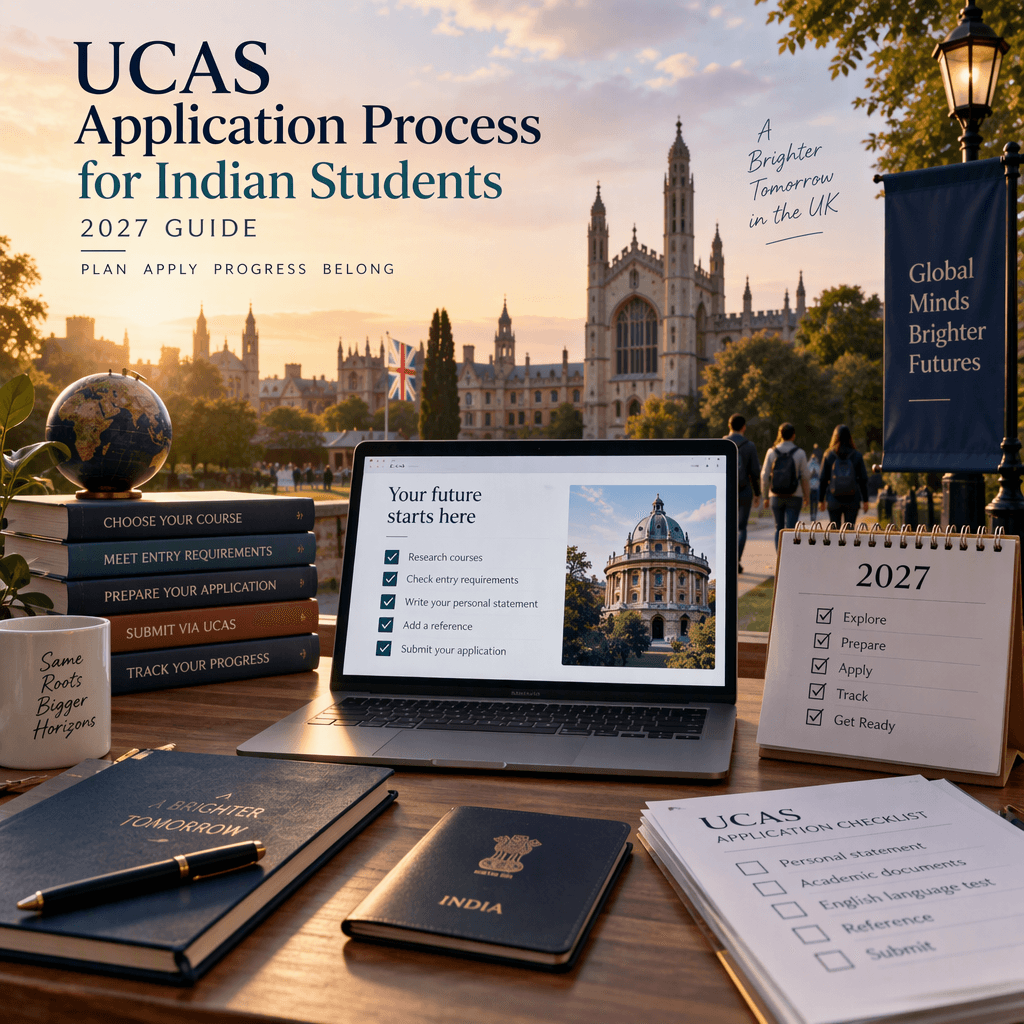
- This guide clarifies the ucas application process for indian students seeking UK university admission in the 2027 cycle.
- It outlines critical steps such as fee payments, document attestation, and tariff conversion from Indian boards like CBSE or ISC.
- Scholars will learn specific deadlines for September and January intakes alongside tips for writing a strong personal statement.
- The article also covers visa prerequisites linked to successful applications and highlights where to find expert support for compliance and academic readiness before travel.
The ucas application process for indian students requires careful planning to meet UK university standards. You must align your academic records with UCAS tariffs and prepare documents for verification. This guide covers the 2027 entry cycle with current fees and deadlines. It also details specific requirements such as board equivalency and attestation. Following this roadmap will help you avoid common errors that delay your admission offer.
Understanding the ucas application process for indian students
Applying through UCAS is the standard method for undergraduate admission in the UK. You will create a single account to submit applications for multiple universities. The platform allows you to compare course options and manage all correspondence. Scholars must ensure every section is complete before submission. Any missing information can cause automatic rejection or delays in review. You should verify that your email address works correctly for ongoing updates.
Key dates and timelines for the 2027 cycle
The window for 2027 entry opens in September 2026. Most courses require your application to arrive by January 2027. However specific competitive courses like medicine have earlier deadlines in October 2026. You will find exact dates on the official portal. It is wise to submit months in advance to secure a reference. Late submissions may be considered only if spaces remain available.
Fees and payment details for the 2026 cycle
The standard undergraduate application fee for 2026 or 2027 is £26.50. This payment covers your choices up to five courses or institutions. You pay this fee using a debit or credit card online. Some scholarships or waivers may apply if you face financial hardship. Check current UCAS Undergraduate Applying for the latest updates on charges and payment options before you start.
Academic requirements and board equivalency
Indian universities evaluate grades from boards like CBSE and ISC using a tariff. You will convert your percentage to a point score based on their charts. Higher grades in core subjects like Math or Physics strengthen your profile. You should list your full qualification including any additional certificates. Do not round off percentages unless asked by the admissions team. Accuracy matters when verifying marks during the offer stage.
CBSE and ISC tariff conversion table
| Board Qualification | Typical Grade | UCAS Tariff Points |
|---|---|---|
| CBSE 12th Class | 90 Percent | 96 |
| CBSE 12th Class | 85 Percent | 80 |
| ISC 12th Class | 85 Percent | 84 |
| ISC 12th Class | 80 Percent | 68 |
This table helps you estimate eligibility before you select specific courses. Always confirm these values with your target institution directly. Rules can change when new admission cycles begin. You must check the individual department requirements for your desired subject. This step prevents mismatched applications that result in rejections.
Document attestation and verification steps
Most UK universities require verified copies of your academic certificates. You may need to attest these documents with local authorities before sending. Some institutions also ask for WES evaluation for your academic records. This process validates the authenticity of your Indian board marks. You should begin this task as soon as you start your application. For further details see our Documentation and compliance support page. Proper documentation ensures you meet compliance requirements for visa processing later.
Writing your personal statement for UK universities
Your personal statement is a key part of your application profile. You should explain your motivation for the chosen subject and career path. Admissions tutors look for evidence of relevant extra curricular activities. Focus on clarity and specific examples rather than generic claims. Avoid copying phrases from other sources to maintain integrity. Review UCAS personal statement tips for indian students for writing advice. A strong statement helps distinguish your application from others in a competitive pool.
Reference letters and teacher recommendations
A reference letter is mandatory for your UCAS form. You will ask a teacher or academic advisor to write this note. The referee will comment on your potential to succeed in higher education. It is helpful to share details about your goals with them early. You must provide your referee time to draft the letter properly. Ask your school administration if they have a standard format. A reliable reference can improve your chances at selective universities.
Steps to prepare before submission
- Gather all academic transcripts and official mark sheets.
- Verify passport details match your application account exactly.
- Write your personal statement and have someone review it.
- Ask your referee to finalize their recommendation letter.
- Confirm your email address and check spam folders daily.
- Complete the fee payment and save your receipt.
- Review all choices for accuracy before finalizing the form.
This checklist helps you maintain control throughout the process. Missing any step can delay your progress or force a new application. You should keep all records safe for the next stage of admission. Consistency and attention to detail are your best tools now.
Managing offers and visa preparation
Once universities review your submission they will issue an outcome. You may receive a conditional offer or a direct accept. Conditional offers often require final exam results in specific grades. You should read these terms carefully to understand what is needed. If you succeed you can prepare for your student visa. Review UK Student Visa for Indian Students 2026: Fees and Timeline for next steps. Visa applications follow UCAS offers and require proof of funds and language proficiency.
Talk to a counsellor
If you want expert support with your UCAS application process for indian students and visa planning book a free pathway consultation with the Uniassure team. We help scholars prepare their documents and ensure academic readiness for a smooth transition.
Documentation and compliance support
Conclusion
Navigating the pathway to UK study demands attention to every academic and compliance detail. You should verify your credentials early and align your timeline with official windows to avoid delays. With careful preparation you can secure offers that match your academic profile and future goals.
Got Questions? We've Got Answers.
Everything you need to know about ASB Uni Assure's services and your global education journey.